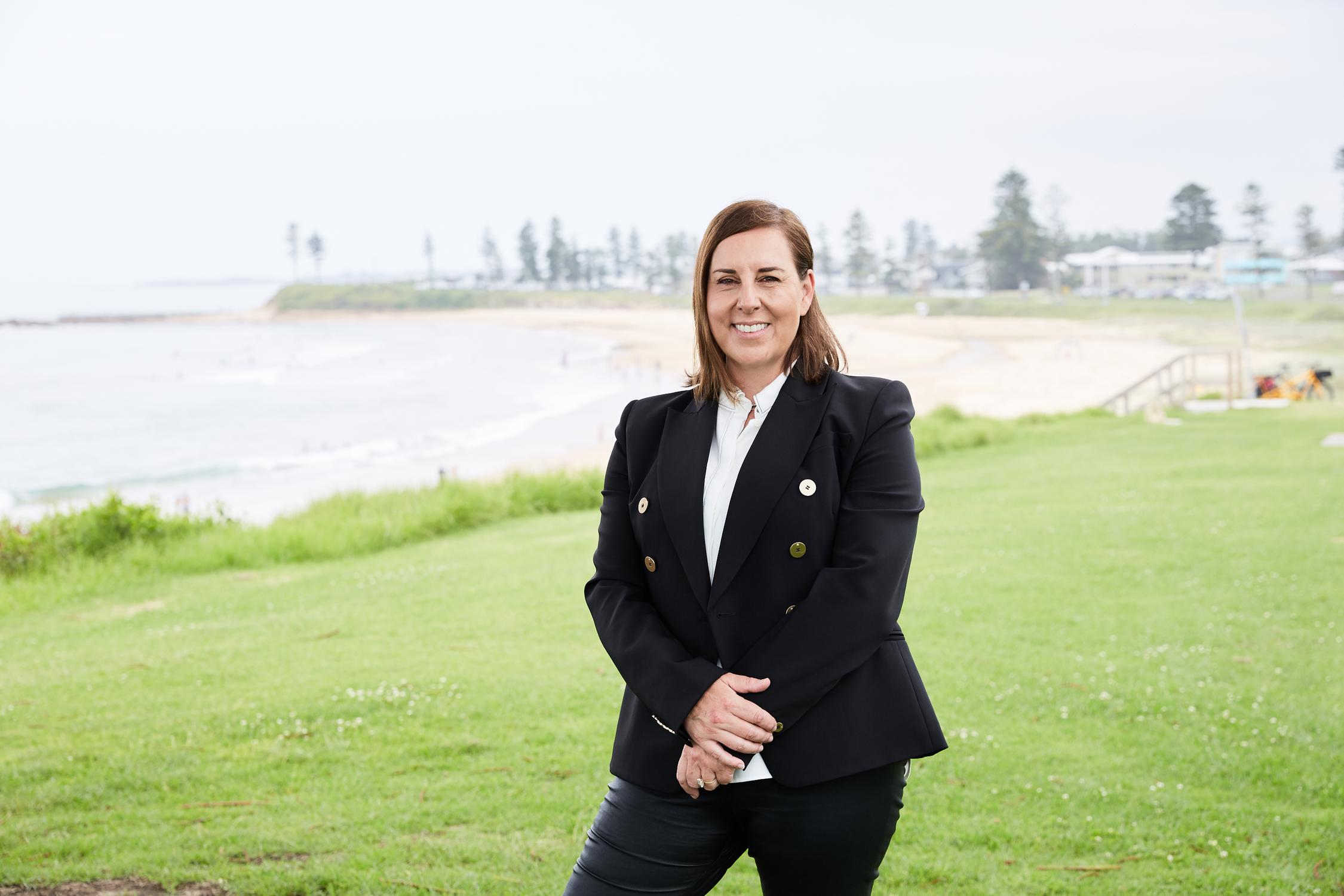
The team at skin cancer detection specialists MoleMap celebrate every time they save a life. Here’s why they make sure caring is at the core of their business model - and how Afterpay helps them in their mission
Michelle Aquilina’s tips for running a successful healthcare business:
- Get the right people on "the bus"
The first step to building a great organisation is employing great staff.
- Ensure your purpose is clear and consistent
Be value driven, be consistent and make sure you know why you're there and what you care about.
- Back yourself and trust your instincts
As a leader, you’re job is to implement strategies to mitigate risks. Push the boundaries and go with your instincts.
When Michelle Aquilina took on the role of CEO of MoleMap, Australasia’s leading skin cancer detection, mapping and diagnosis specialists, in September 2021, she says one of the aspects of the business that most impressed her was how thoroughly it centred on its patients. “Since it was originally founded in 1997, it had one goal,” she says. “To decrease the number of deaths from melanoma.”
That goal is much more than just a line in a spreadsheet or forecasting model. It’s something that Aquilina and the team say they celebrate every day.
Early detection and saving lives is what matters to us.
“Early detection and saving lives is what matters to us,” she says. “We make life-changing discoveries for individuals and families. For me, those are the most fulfilling moments.”
In fact, those moments are so powerful and impactful, Aquilina says, that the team takes time to celebrate and acknowledge each success. “Oh, we talk about them all the time, we celebrate them,” Aquilina insists. “We will always communicate from the bottom up on any diagnosis that has saved a life and made an impact to an individual. We genuinely care."
It’s this legitimate empathy, one that Aquilina tries to model from the top, that she believes is behind the company’s success over the last 25 years. From its early beginnings in New Zealand, MoleMap now has 110 staff across New Zealand and Australia, and in 2021, it achieved its highest revenue ever.
A singular focus
Most importantly, the team diagnosed just under 5000 suspected melanoma and skin cancers during 2021. And the company’s future projection is ambitious, with plans to double in size in the next few years.
Aside from a culture of compassion, the key to MoleMap’s success is that it has a clear and unflinching focus, according to Aquilina. Skin cancer detection and diagnosis is all they do. “We are a holistic, end-to-end service,” she says.
A tech-meets-expert approach
When a patient visits MoleMap, a dermacopic camera is used to identify any benign or malignant skin lesions. Those images are pushed into the cloud where an algorithm is used to identify any anomalies. And then, critically, a human element is brought in; the data is sent to a telehealth dermatologist who makes a final diagnosis. A report is prepared for the patient, letting them know whether things are all clear, if they need to return or whether there’s an identified melanoma or skin cancer.
“All we do is look at skin – monitor and check,” Aquilina says. “Every year people have their eyes checked; they visit the dentist. We want the community to include regular, routine skin health checks. That’s the gap we’re filling.”
Making health more accessible with Afterpay
The biggest barrier for MoleMap’s patients has been cost. “That initial visit with a MoleMap specialist isn’t government-funded,” Aquilina explains. Her solution? Afterpay. “As soon as I took the reins, I quickly identified there was a significant opportunity for Afterpay to be embedded in our business model,” she says. When she brought it on, she saw an immediate uptake from patients, estimating that around 5 per cent of new patients used Afterpay to pay for their MoleMap service, and existing patients also rushed to come on board the buy-now-pay-later model.
By providing affordable and accessible healthcare Afterpay is saving lives.
For Aquilina, the impact was undeniable. “What Afterpay has done is create affordable and accessible healthcare,” she says. “That should not be underestimated. Afterpay is saving lives.”
Michelle Aquilina’s tips for running a successful healthcare business:
- Talk about ‘the bus’
“Jim Collins talked about this in his famous book Good To Great. His work was based on five years of research into what makes good companies great. That metaphor really resonates with me. We’re an empowered, bottom-up organisation and we have the right people on the bus and the wrong people off the bus. Companies need to talk about the bus… I think it’s really important.”
- Ensure your purpose is clear and consistent
“Our organisation’s purpose is clear, and there’s consistency. It’s value driven. We exist for the people, we take patient care very seriously, and what matters to us is early detection and saving lives.”
- Back yourself and trust your instincts
“With COVID in particular, we had to forecast what could potentially happen. As a leader, you’re implementing and mitigating against potential impact to the business. What the pandemic enabled me to do – as an individual – was test my boundaries, push my boundaries and go with my instinct.”
All references to any registered trademarks are the property of their respective owners. Afterpay does not endorse or recommend any one particular supplier and the information provided is for educational purposes only.

Categories