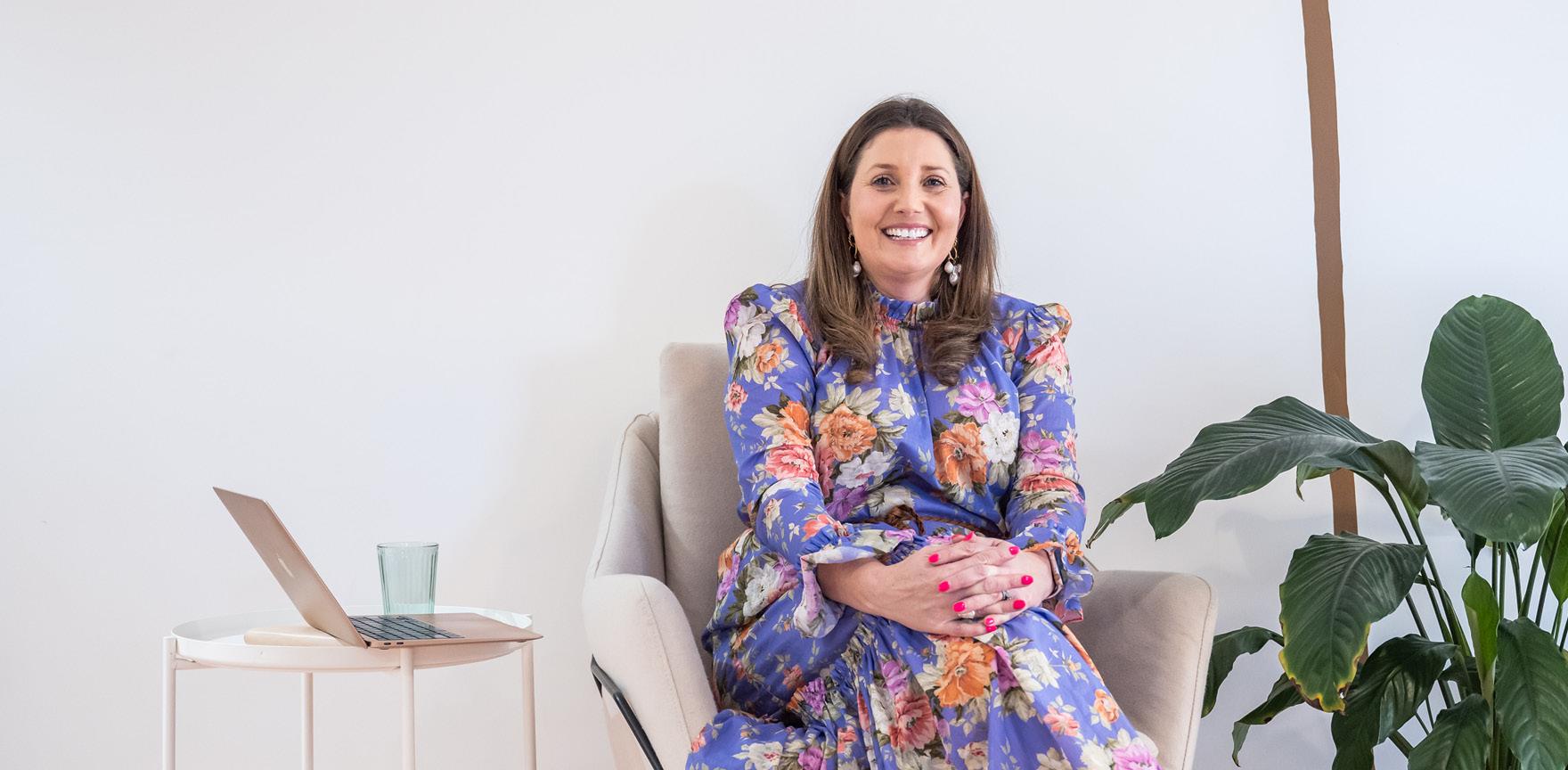
Incy Interiors is stocked around the world, and its success began with a smart marketing strategy.
Kristy Withers has built her furniture brand into a global powerhouse. Here’s how she did it.
- A distinctive design.
The company's products have a unique aesthetic that is expressed across all marketing channels.
- A savvy marketing approach.
As a marketer, Kristy formulated a clear strategy before launching.
- Remaining flexible.
The brand has switched between direct-to-consumer (DTC) and wholesale over the years.
When Kristy Withers’ son was 18 months old, she knew it was time to transition him from a bassinet to a ‘big boy’ bed. But when the style-conscious mother and marketing expert looked around, she couldn’t find anything resembling the dark brown iron bed frame she had in mind.
At the time, she was traveling overseas for work regularly. “I was seeing all these amazing products overseas, stuff we just didn’t have in Australia,” she says. She quickly realised there was a gap in the market for beautiful interior products for kids, and it got her thinking.
“I did a research project for eBay, and saw that the fastest growing industry was baby, home and online,” Withers recalls. “It was also just post-GFC, and everyone was entertaining at home more, becoming more house-proud. This, combined with the trend of women having children older and thus having a bigger disposable income made me think my idea wasn’t so dumb.”
After months of talking to anyone who would listen about it, her husband finally cracked and told her to just do it. And she did: in 2008, Withers settled on her first five cot and bed designs, and since then the company has sold nearly 100,000 products, with the average order costing $850. Today, the brand is stocked in more than 200 stores across nine countries – and Withers says they’re just getting started in an $8.5bn market.
A marketing strategy makes a difference
As the former head of marketing and advertising for eBay, Withers knew how to sell. Instead of calling publications to advertise ad hoc, she put together a 12-month package that included a media schedule, promos, giveaways and strategically timed ads.
“Everyone else would just call up and say oh, we need ads tomorrow to make sales – that is not how I operated,” she says. It was this knowledge that got her off to a running start, even if logistics (“I just had no clue how much space you needed to store all the products!”) was still a mystery.
“Having that corporate background and understanding how to target the right people with the right messaging is what really gave us an edge,” Withers continues. “I think a lot of people get lost here”.
"Targeting the right people with the right messaging gave us an edge.”
Another advantage of working in marketing was that Withers understood the importance of identifying and knowing your target market. Before she launched, Withers recalls going to all her friends – a group of young mums or women thinking about soon becoming mums – and getting their feedback about the whole design process.
It was this market research that helped her hone Incy’s aesthetic, which Withers then reinforced across all the brand’s channels.
“We have a different look to other kids’ furniture businesses – classic but cool – and that’s stood the test of time,” she explains.
Don't be scared to change direction
When Withers first conceived of her business model, she thought she would only sell direct to consumers. Yet after receiving a huge amount of interest from other stores wanting to stock her products, she decided to pivot.
“Back then, I didn’t even know what wholesale was: I just thought I’d sell straight to consumers,” she laughs.
But the key to any long-standing business, she says, is to be adaptable.
“We started off as a retail outlet, then quickly swapped to wholesale after I realised there was this whole opportunity there,” Withers says. “At the end of 2017, we had 200 stockists.”
Unfortunately, soon after that, four out of the five major baby retail brands went into administration, and Incy Interiors went from being stocked in 200 stores to just 70. Burned, Withers pivoted back to retail and opened two stores (in addition to her website).
How COVID-19 hit the cot business
It wasn’t until last year that Incy began to be stocked in wholesalers again – a decision that Withers says was partly driven by COVID-19.
“Since COVID, our direct marketing costs online have tripled: everyone was looking online, so the demand for those eyeballs went up,” she says. “So, when Baby Bunting approached us, we thought it would be a good chance to go back to wholesale.”
Like so many other businesses, the company suffered from supply issues and steep price hikes over the last two years, a problem that’s ongoing even if people think COVID’s all over, says Withers.
"Container and shipping costs are four times what they were before the pandemic."
“Everything now just takes longer, and is harder and more expensive,” she says. “For example, container and shipping costs are four times what they were before the pandemic.” While the business has tried to absorb the costs by cutting out anything not 100-per cent necessary, Withers says they’ve had to raise prices slightly to compensate for the disruptions.
Incy Interiors is now in the process of transforming from 95 per cent direct-to-consumer and 5 per cent wholesale to a 50/50 model due to both a rise in social media advertising costs and pandemic-related supply and logistics costs. But Withers concedes it’s important to remain open-minded.
“People get so set on one business model and are not open to changing – I think that’s a mistake,” she says.
"People get set on one business model and are not open to changing – I think that’s a mistake."
Today, Incy Interiors is a staple brand in New Zealand and the UK, and will be operating in South East Asia from next month in countries such as Vietnam, South Korea, Singapore, Hong Kong and potentially Malaysia.
Follow your gut
Always on the hunt for new designs, Withers was looking at her rose gold watch when it occurred to her the colour would look amazing as a kids’ bed frame.
“I got the factory to do some samples, but they just weren’t right. In the end, I posted my watch to them and told them that I wanted this exact colour.”
Nine years later, it’s still one of Incy’s most popular styles: even tennis legend Serena Williams has one.
Figure out if it’s a hobby or a business
While in today’s hustle culture it seems anything can be monetised, Withers says you really need to consider whether your passion is a hobby or a business.
“It’s not a business unless you can make money out of it.”
“It’s not a business unless you can make money out of it,” she says. “If you love it and enjoy it, consider if you want to turn that into something that is extremely hard work. Turning a hobby that isn’t financially viable into a business is hard and relentless.”
Afterpay is where the customers are
During Afterpay’s early days, Withers noticed that her millennial staff were all raving about it.
“My team is young – and the next generation of parents – so when I heard them talking about it, I decided to adopt it early,” Withers says. “Because I worked in the tech industry, I’m constantly on the lookout for new things to adopt.”
Withers says Incy Interiors experienced an immediate spike in sales after adopting Afterpay and continues to generate a large amount of sales through the Buy-Now-Pay-it-Later service.
“Credit cards have dropped off, and Afterpay is now the fastest-growing payment method for the business,” she explains.
Withers says every business should consider adopting Afterpay, as not only does it have significant brand awareness, but also makes expensive bedroom purchases achievable for families who may not be back to pre-baby income levels.
“Most women are not back to full capacity financially when kids are coming to their first big bed, so it’s just helpful to have that option,” she says.
All references to any registered trademarks are the property of their respective owners. Afterpay does not endorse or recommend any one particular supplier and the information provided is for educational purposes only.

Categories