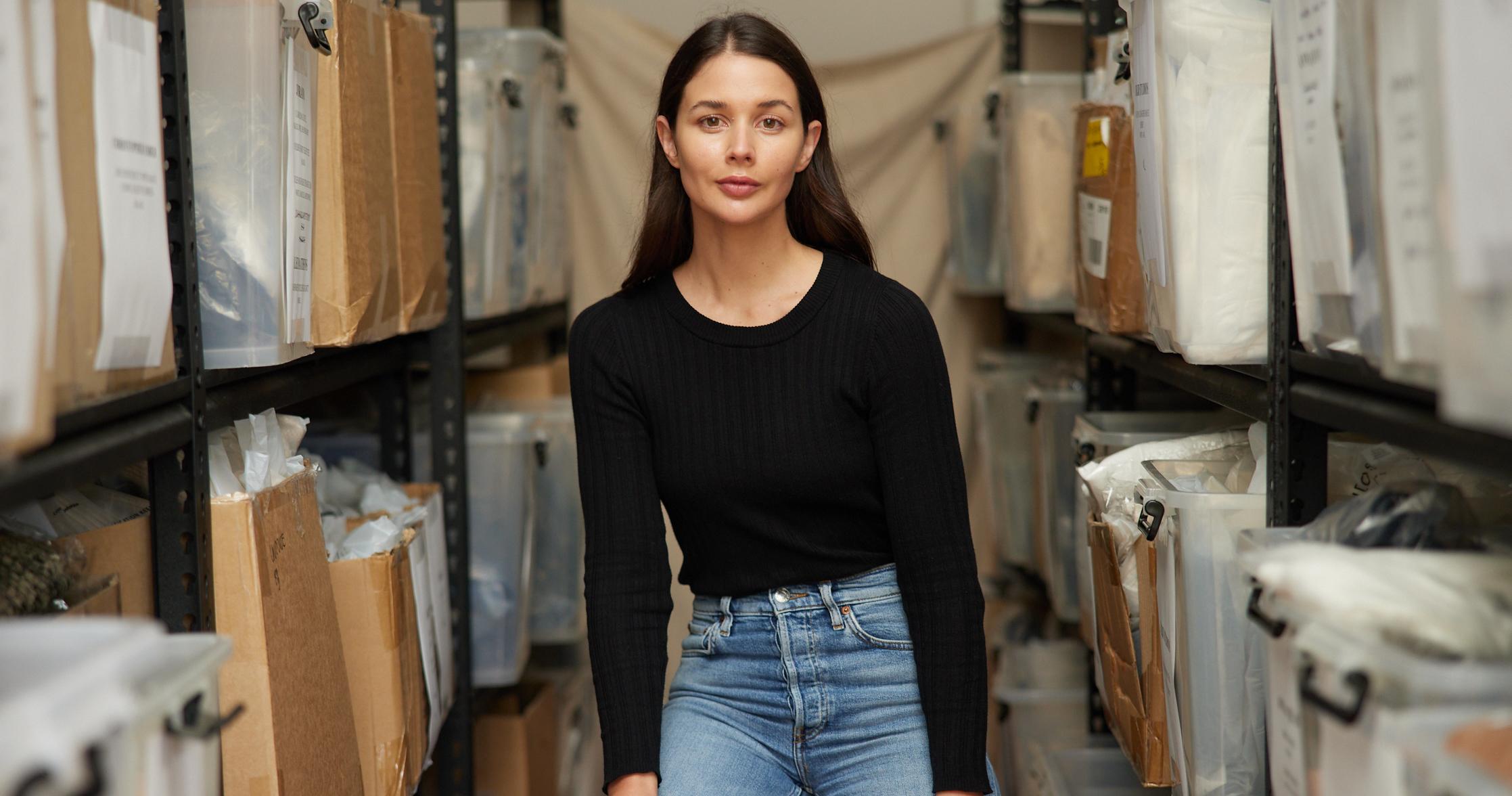
The Undone’s Sara Crampton talks customer centricity, Instagram and diversity.
Sara Crampton’s tips for launching a fashion business:
- Create a smart social media strategy
Post often, be flexible and create content that’s useful, inspiring or educational.
- Make your customers feel welcome
Embrace diversity and ensure that your models reflect your customers' age, size and ethnicity.
- Identify your niche
For The Undone, that’s neutral, stylish classics
Although The Undone is Sara Crampton’s first e-commerce business, it’s hardly her first foray into fashion. Since 2008, she has been blogging under the moniker Harper and Harley, where she posts photos of herself wearing neutral, classic pieces, and today has 533,000 followers on Instagram.
The Undone was born out of Crampton’s frustration at having to scour multiple websites to find neutral garments she loved. “I thought, ‘There needs to be a store that just has my style. Why isn’t someone just talking to this individual style?’”
And then it dawned on her: with a degree in business and a background in e-commerce, she was perfectly positioned to do it herself. “It was a no-brainer.”
Right from the beginning, Crampton had a clear vision for The Undone: a website that would reflect her personal style, and offer stylish, classic clothing and accessories in a black, white and neutral colour palette.
Six years on and you still won’t find any pink or blue garments on The Undone - although Crampton admits there is one rogue, moss-green dress (“That’s a neutral, right?” she laughs).
If anything, the social media influencer-turned-entrepreneur has doubled down on her original vision, and tailored her edit even more closely to her customers’ tastes and preferences. In the past six years, Crampton has tweaked the size ranges, adjusted the social media strategy and introduced sub-categories — all in a bid to serve a very specific (neutral-loving) customer.
It’s a customer-centric approach that’s paid off. The Undone now employs five staff, turns over seven figures and saw 30 per cent year-on-year growth in 2021. And Crampton isn’t finished yet, with plans to launch a brick-and-mortar store and one day, hopefully, her own fashion line. “We’re here for the long-term. I really love it,” she says.
Smart social media strategy
One of the keys to The Undone’s success has undoubtedly been the website’s social media strategy, not to mention Crampton’s pre-existing social media audience.
“That was instrumental,” admits Crampton. “I had a very targeted audience to talk to…but there’s still opportunity there. And, actually, I didn’t utilise [my following] as much as I could have – or should have – in the beginning.
"Every brand needs a face to have that connection with customers."
“I wanted the brand to speak for itself without me speaking for it, but I learned that every brand needs a face as well to have that connection [with customers].”
Crampton’s other social media tips for small business owners include:
Post regularly
“It’s all about consistency. You need to post at least three times a day on Instagram… and Instagram stories as well. You need to create a lot of content.” The Undone also sends four newsletters a week to cater to subscribers who hunger for “newness”.
Be flexible
Crampton pre-plans as much content as possible, but adds, “You need to be aware when things change and the needs of the business change. If it’s raining, you can’t talk about dresses. You need to think about what the customer is doing that day and speak to that.”
Be useful
“Don’t just product-push. People see a lot of content. So, be helpful or share something personal,” says Crampton, who cites posts like “one piece, five ways” or “outfit inspiration” as useful content that performs well for The Undone. A personalised edit or editor’s letter is another successful tactic, she adds.
Invest in content
The Undone recently took its content production in-house, and now has a photographer on staff, which has been a cost-saver, says Crampton. Sometimes, she adds, the photos that are shot for The Undone will then be offered to brands that stock on the site as part of the negotiation process, she adds.
Diversity matters
One of the most visible changes to The Undone over the past year has been its models, who now range in age, ethnicity and size.
“I think the Black Lives Matter movement was a big awakening for a lot of people, myself included,” says Crampton, who has made it a priority to ensure that customers see themselves reflected in the models on the website.
"I wasn’t aware that I could say to agencies, ‘Can I get more options?’”
She has also become more assertive about requesting curvier models. “I think, early on, I wasn’t aware that I could [say to agencies], ‘Can I get more options?’”
When asked whether the new approach has helped grow revenue, Crampton is emphatic. “Massively,” she replies. “We had 30 per cent year-on-year growth… and that is definitely one thing that has helped us.”
If anything, she says, she wishes more Australian brands would extend their sizing beyond 14. “Not enough of the ‘cool’ fashion brands – the ones we see at fashion week – are doing bigger sizes. There’s only a handful that do a [size] 16… and there’s just so much opportunity there. If they want to grow their brand, to be interesting, just do it… even if you’re just offering it to wholesale [customers].”
Go niche, or go home
While The Undone is in many ways a niche offering — selling only clothes and accessories in a neutral colour palette — Crampton has found success by niching down even further, with maternity, breastfeeding or petite edits, for example.
She has also refined her selection of brands. “We’ve really learned what sells,” says Crampton, who made the mistake, early on, of stocking ‘it’ fashion brands for the sense of prestige, only to find they were too expensive for her customers or too readily available elsewhere. Today, she says, the brands that work best are those — like Marle and Matteau — without physical touchpoints or shops in every major mall.
Offering payment options
Crampton enabled Afterpay soon after launching, and today says that 20 per cent of customers use it at checkout and that “without a doubt” it increases conversion.
“For us it was a no-brainer… I had learnt early on in my career that offering additional payment options in the checkout that make the payment process more streamlined, such as the customer not having to pull out a physical card, will result in a higher conversion rate and less drop off during checkout.
"Customers expect this option at checkout.”
“Afterpay is the leader in the ‘buy now, pay later’ space and customers expect this option at checkout.”
Interestingly, Crampton adds that Afterpay also has one of the lowest return rates compared to other payment options.
Future fashion plans
Crampton says it hasn’t all been smooth sailing. Early mistakes included signing a two-year lease on an office space that was, in retrospect, far too big, and also buying too much stock too soon.
But Crampton, who only began paying herself a salary in the past few years, is proud of simply “sticking it out” during the challenging times. “Just having the grit and the in-built self-belief to keep going when things aren’t working," she explains.
In the next two years she hopes to open a physical store - “I absolutely want to have a store so that customers can come and try things on. They’re asking for it” – and down the track, launch a fashion line of her own.
“There’s more to do, there’s lots of scope. But I really believe we’re helping people. We’re just trying to save them time, and make them feel like the most comfortable, confident versions of themselves.”
All references to any registered trademarks are the property of their respective owners. Afterpay does not endorse or recommend any one particular supplier and the information provided is for educational purposes only.

Categories